
Earlier this month we celebrated my husband’s birthday with a little daytime event in our yard. We love gathering friends and family, and try our best to reduce waste as much as possible. In this post I’ll share swaps I tried, and talk about the pros and cons of each swap.

“Disposable” (reusable) cups
Before swap: Solo plastic cups
Swap tested: Ball 16oz. aluminum cups, available on Amazon, as well as BevMo and TotalWine
Swap Keeper scale: 10 out of 10, These cups are awesome!
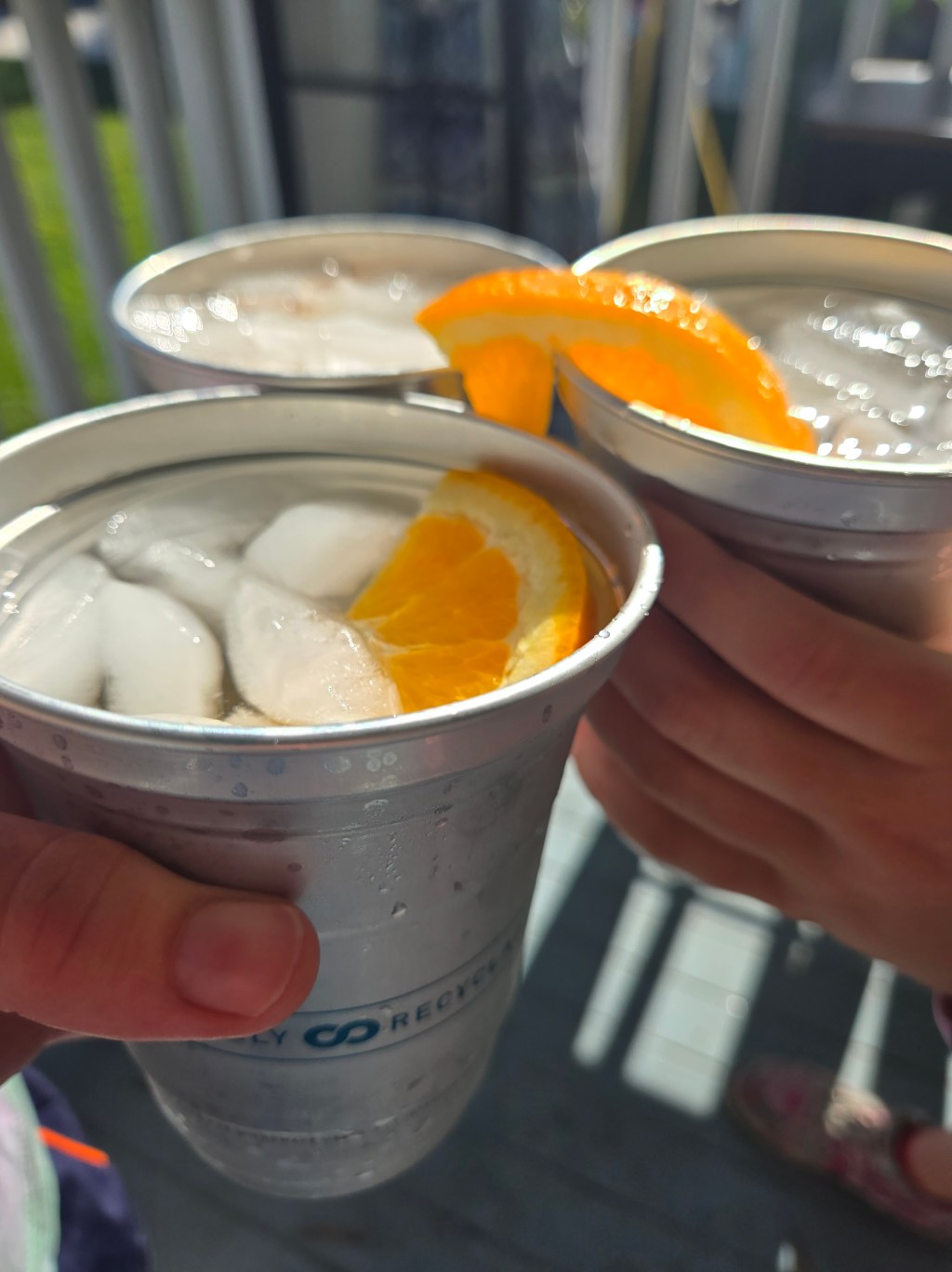
One of our favorite products are reusable aluminum cups. This past event, the aluminum cups received a lot of attention from folks also looking to swap to more sustainable products.
Pros: These cups are sturdy, still a familiar “red cup” size, and hold the temp of a cold drink longer than their plastic counterparts. Even though the box labels them as disposable, we wash them and reuse them for future events. We use markers for folks to mark their cups, and just cross off names from prior events to extend their life. They are stackable, dishwasher safe, and overall have been a great addition to our reusable party supplies.
Cons: There really isn’t anything I don’t like about these cups. If you want to wash them to reuse them again, you may need a separate bin or bucket to collect the cups to avoid them ending up in the trash or recycle.
Individual water
Before swap: Individual plastic water bottles
Swap tested: Glass beverage dispenser, similar to this one available on Amazon
Swap Keeper scale: 8 out of 10, best in certain situations

For water, we chose to go the dispenser route. We use a large glass dispenser, on a very sturdy table (this is key), and park a stack of aluminum cups and a pen nearby.
Pros: In using a large drink dispenser, you can customize the water and choose whether you want to include ice, fruits, or other additions. These dispensers look nice, enable people to see what’s inside, allow people to take only what they want (no more almost full water bottles after a party), and overall are easy to use .
Cons: Especially for glass dispensers, they can be heavy and slightly challenging to maneuver for cleaning, but still worth it. In my personal opinion, these glass dispensers should only be used for situations where you have a sturdy table. I would suggest avoiding putting anything glass on a folding table to avoid mishaps and dangerous situations such as with kids and bare feet running around.
Disposable plates and silverware
Before swap: Generic paper plates and plastic utensils
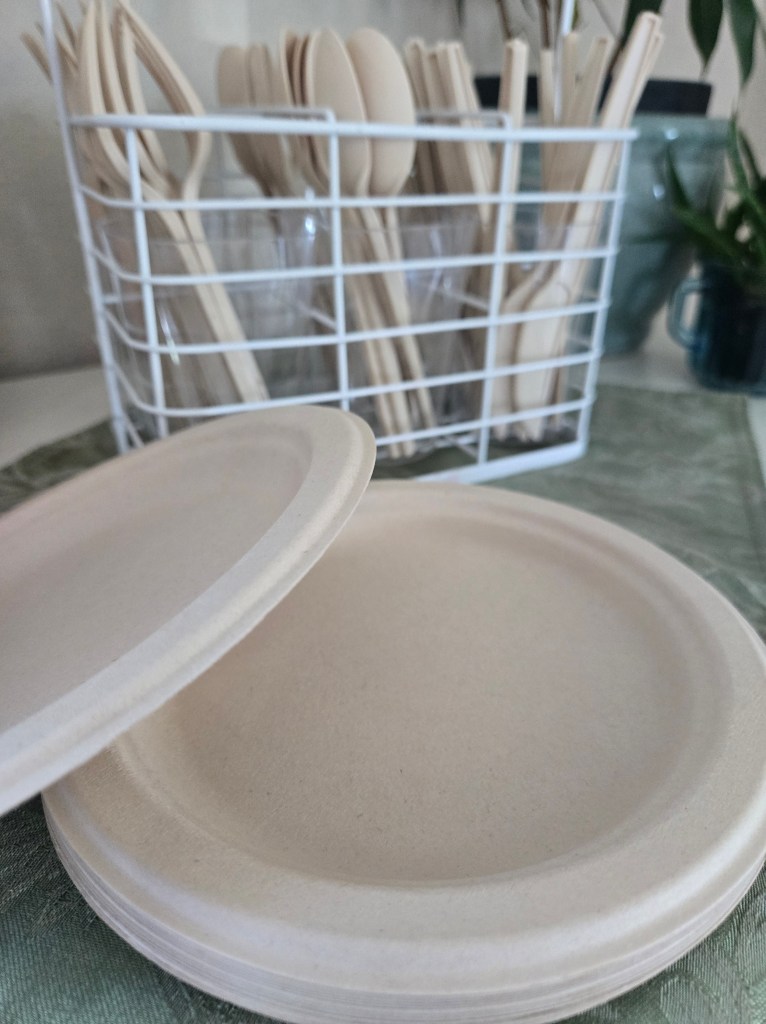
Swap tested: Unves plant-based plates and silverware available on Amazon
Swap Keeper scale: 6 out of 10, no issues but there is a lack of information around the entire lifecycle of these products, and how good for the environment they truly are.
For this event I was short on time for prep so I turned to Amazon for a new to me brand of earth-friendly plates and silverware. The heavy duty plant-based party plates are made of sugarcane fiber and are noted as biodegradable, while knives, forks and spoons are made of cornstarch and are listed as compostable.
Pros: The plates were very sturdy, were able to hold up a full plate of tacos and sides, and didn’t leak through. The utensils are sturdy and didn’t snap like traditional plastic utensils tend to do.
Cons: Although these products (and many others) claim to be biodegradable and compostable, they would need to be disposed of in specific ways for to truly meet those claims. We weren’t able to compost the plates because we ate meat on them, so unfortunately they had to be put in the trash. While it’s still better than plastic, more research is needed to identify better options. We’ll call this a level one swap…we can level up in the future when we find better alternative products and ways to dispose of compostable and biodegradable items.

Disposable Napkins
Before swap: Generic disposable paper napkins
Swap tested: iBambo bamboo napkins available on Amazon
Swap Keeper scale: 8 out of 10, thick and sturdy but not super absorbent.
The napkins are FSC (Forest Stewardship Council) certified meaning they are produced sustainably with zero deforestation over time and with ethical labor conditions. Find out more about the FSC here: https://fsc.org/en/label
Pros: I am happy to see the sustainability certification, and the napkins are sturdy. They look nice and are compostable too.
Cons: The texture of the napkins is slightly slick, so it feels less absorbent than napkins that have a more textured and fibrous surface.
I hope some of these swaps inspire you to search for products to replace plastic and one-time use party items. Any swaps towards a healthier you and a healthier planet are wins in my book.
What's Next:
Swaps around the house!

 Swaps For Good by Jaclyn Fitch
Leave a comment